
US Election Odds For 2026 Midterms And 2028
Welcome to Electionodds.com, the best resource for tracking all U.S. election odds for the midterms in 2026 and beyond. Every two years, Americans head to the polls to elect everyone from their local mayor to the President of the United States. Between those elections, billions of dollars change hands on prediction markets like Polymarket and Kalshi as traders try to forecast the outcome of every meaningful race in the country. We pull the live data from those markets, average it across both sources, and present it in one place — for free, without affiliate spam, without ads pretending to be content.
If you're here to find out who's favored in the 2028 presidential race, who controls Congress after the 2026 midterms, which Senate seats are toss-ups, or whether your state's gubernatorial race has shifted in the past week, you're in the right place. We track over 200 active U.S. election markets and update twice a day so the numbers you see here reflect what real traders with real money on the line believe right now.




 Betting Odds For The 2026 Midterms — Balance Of Power
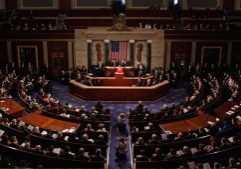
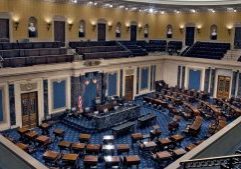
The midterm elections on November 3, 2026 will determine which party controls the U.S. House of Representatives and the U.S. Senate for the second half of President Trump's term. All 435 House seats are on the ballot, along with 35 of the 100 Senate seats. Prediction markets currently see a divided Congress as the most likely outcome — Democrats are heavily favored to flip the House, while Republicans are slight favorites to hold the Senate.
Off-year wins for Democrats in Virginia and New Jersey in November 2025, combined with President Trump's approval rating slipping into the mid-30s, have pushed traders steadily toward the Democratic side over the past month. The Senate map remains tougher for Democrats simply because of which seats are up — they're defending more competitive ground than Republicans are.
See All Senate Odds - See All US House Odds
 2028 Presidential Election Betting Odds
The 2028 presidential race is already the highest-volume political market on Polymarket, with over $596 million wagered to date. With Donald Trump term-limited, both parties face genuinely open primaries for the first time since 2016. On the Republican side, Vice President JD Vance is the narrow frontrunner but Marco Rubio has been climbing steadily. Democrats face a wider field still: California Governor Gavin Newsom leads, but Pennsylvania Governor Josh Shapiro, Pete Buttigieg, AOC, and former VP Kamala Harris all have meaningful market share. Find all presidential election odds for 2028 here.

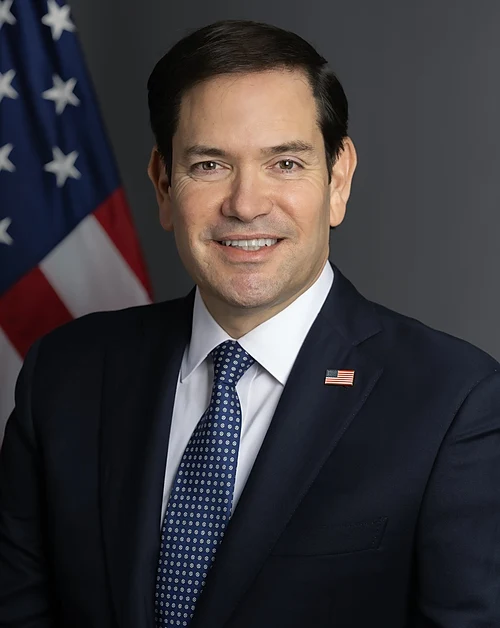


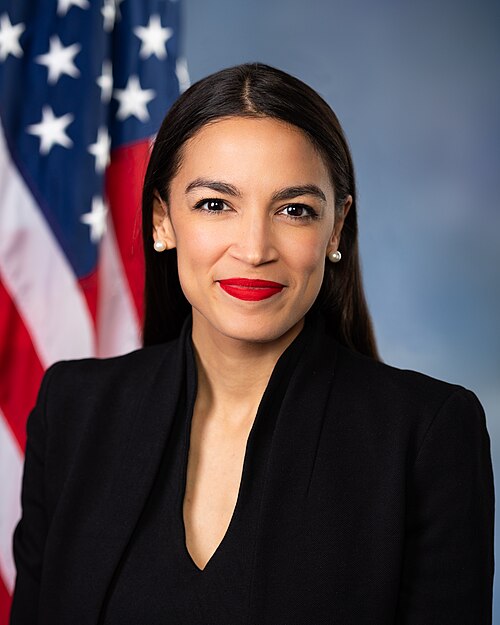
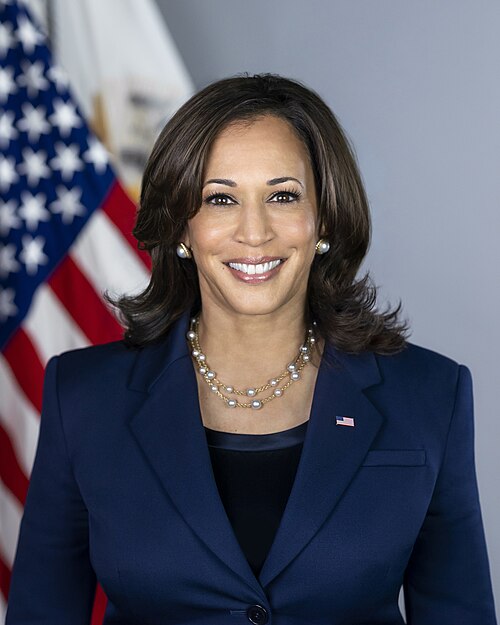
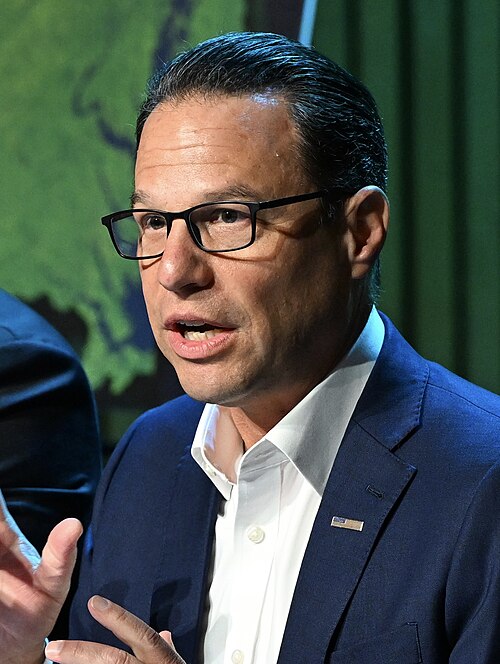

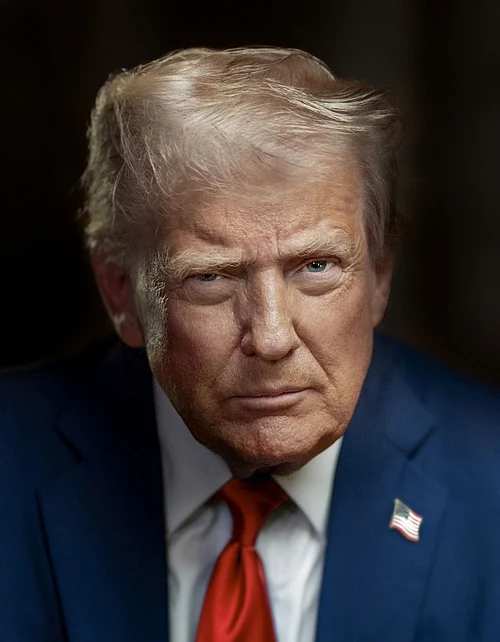
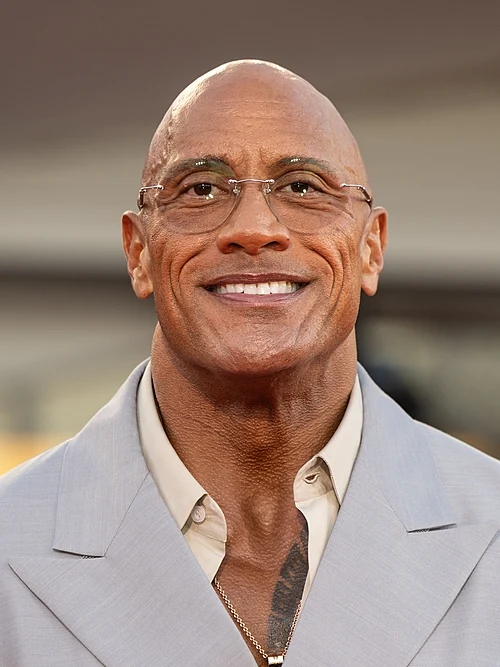
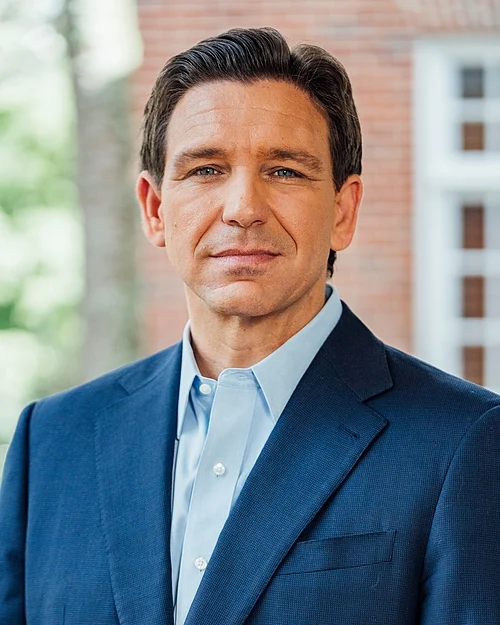
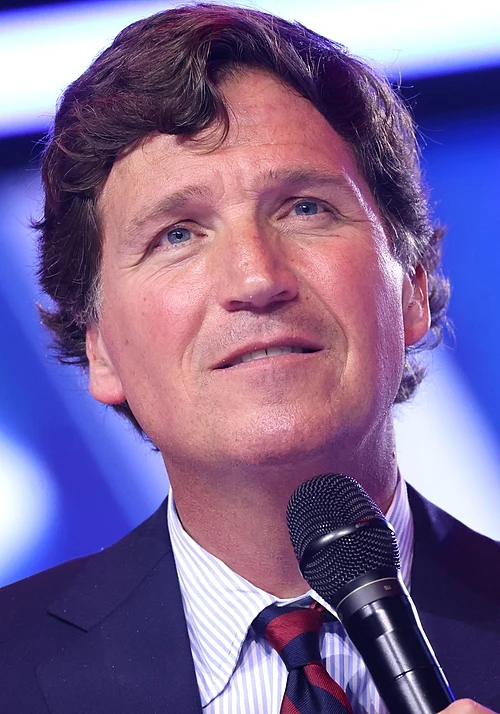
 Featured Candidates In 2026 Elections
The frontrunners from each party with their full slate of active markets — nomination odds, head-to-head matchups, and more. Probabilities reflect what traders are paying for "Yes" shares right now on Polymarket and Kalshi.
 May 2026 Primary Calendar
The 2026 primary calendar just hit its busiest day. Six states voted Tuesday, June 2, California, Iowa, Montana, New Mexico, New Jersey and South Dakota, and two results upended expectations: Iowa Republicans rejected Trump-endorsed Rep. Randy Feenstra for political newcomer Zach Lahn, and California's top-two primary advanced Republican Steve Hilton and Democrat Xavier Becerra while billionaire Tom Steyer, the longtime polling leader, finished third and was eliminated. Below is the June 2 rundown, the late-May results behind it, and what's still ahead this month.
Ken Paxton defeated Sen. John Cornyn in Tuesday's Republican Senate runoff, with Cornyn conceding on election night. President Trump's May 19 endorsement of Paxton — one week before the runoff — proved decisive, mirroring the Trump-backed primary defeat of Rep. Thomas Massie in Kentucky a week earlier. Paxton now faces Democrat James Talarico in November in what became the most expensive Senate primary in Texas history. In the down-ballot races, state Sen. Mayes Middleton beat Rep. Chip Roy for the GOP attorney general nomination, and former Rep. Colin Allred won the Democratic runoff in TX-33. Find all Texas Election Odds.
Trump-backed Ed Gallrein defeated Rep. Thomas Massie in the most expensive House primary in U.S. history at $32.6 million. Rep. Andy Barr won the GOP Senate nod at 64% over former AG Daniel Cameron to replace retiring Mitch McConnell. Charles Booker won the Democratic Senate primary. Kentucky Election Odds
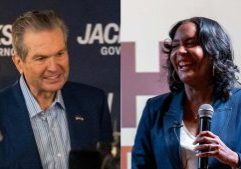
Both the GOP governor and Senate primaries head to a June 16 runoff. Trump-endorsed Lt. Gov. Burt Jones failed to clear 50% against businessman Rick Jackson. Rep. Mike Collins and former football coach Derek Dooley advance to the Senate runoff. Former Atlanta Mayor Keisha Lance Bottoms won the Democratic governor primary outright. Georgia Election Odds
Sen. Tommy Tuberville won the GOP gubernatorial primary and faces former Sen. Doug Jones in November. The Senate primary heads to a June 16 runoff between Trump-endorsed Rep. Barry Moore (40%) and former Navy SEAL Jared Hudson. AL-1, AL-2, AL-6, and AL-7 hold special primaries August 11. Alabama Election Odds
Oregon set up a Kotek-Drazan rematch; Sen. Jeff Merkley took 93%. Pennsylvania Gov. Josh Shapiro and Stacy Garrity head uncontested to the general; Shapiro-endorsed Dems won all four targeted swing House districts. Idaho Sen. Jim Risch won renomination at 67% and Gov. Brad Little is seeking a third term. Oregon Election Odds
North Carolina: Laurie Buckhout won a GOP runoff for NC-1. West Virginia: Sen. Shelley Moore Capito won at 66.5% and attorney Rachel Anderson pulled off a major upset over Jeff Kessler in the Democratic Senate primary. Nebraska: Don Bacon's retirement leaves NE-2 as an open seat between Brinker Harding and Denise Powell. North Carolina Election Odds
California's top-two governor primary sent Republican Steve Hilton and Democrat Xavier Becerra to November; Steyer finished third and is out, and Mayor Karen Bass advanced to a runoff in the LA mayor's race with Spencer Pratt leading for second. Iowa delivered the night's biggest upset, with Zach Lahn edging Trump-backed Randy Feenstra for the GOP gubernatorial nod, while Rob Sand (D) and Ashley Hinson (R) set up an open Senate race. New Mexico nominated Deb Haaland (D) and Gregg Hull (R) for governor. South Dakota's GOP governor primary heads to a July 28 runoff between Toby Doeden and Gov. Larry Rhoden after Rep. Dusty Johnson fell to third. In New Jersey, Rebecca Bennett won the NJ-7 Democratic primary. CA - IA - MT - NM - NJ - SD
The next two Tuesdays bring the cycle's next wave of contests. On June 9, Maine, Nevada, North Dakota, and South Carolina hold primaries, with Maine's open governor race and Nevada's competitive Senate and gubernatorial fields drawing the most market attention. A week later, on June 16, Georgia and Alabama resolve the runoffs left over from their May 19 primaries — both states settle their Republican governor and Senate nominations, including the Trump-backed contenders who failed to clear 50% the first time around. Louisiana's general primary runoff follows on June 27 if no candidate reaches the threshold outright. Each of these dates is a potential market mover, so expect the odds on the affected races to shift fast as results come in. ME - NV - ND - SC
US Governors and City Mayoral Races Betting Odds
While presidential and Senate races get most of the attention, governorships and big-city mayoralties often produce the most lopsided prediction-market action — partly because the candidate field is smaller and partly because state and local political insiders are more likely to have private information than national-race observers. Polymarket alone has seen nearly $20 million in trading volume across California gubernatorial markets this cycle, and the June 2 primary proved how unpredictable these races can be: billionaire Tom Steyer led the Democratic field for months but finished third, leaving a Becerra-Hilton general election. See all available betting odds for governor here. See all available betting odds for governor here.
2026 Governor races
Mayoral races
 Trump Prediction Markets And Betting Odds
Polymarket runs continuous markets on where President Trump's approval rating will land throughout 2026 as well as dozens of other prop bets. Below: the live odds on how high or low his rating will go this year, plus other Trump-related markets traders are watching closely. We have recently built and entire page dedicated to all of the Trump prediction markets and betting odds. There you will find every single Trump market that is available for you to bet on with live odds. If you do not see the Trump odds on our page then they are probably shut down or closed.
Explore by topic
Beyond the headline races, we maintain dedicated trackers for the political stories where prediction markets move first — Supreme Court vacancies, special elections that decide which side has the votes in Washington, redistricting fights that could redraw the House map mid-decade, the latest polling on Trump approval and the generic ballot, and our 50-state guide to which way every state leans. Pick the tracker that fits what you came here for. Live odds inside each one.
Political Polls Tracker
The most-watched approval and ballot numbers in American politics, updated twice daily from VoteHub's aggregate of hundreds of pollsters. Trump approval has been the story of 2026, sliding from the high 40s on inauguration day into the mid-30s as tariff-driven inflation hits consumer wallets. The generic congressional ballot — the single most predictive number for the midterms — has tilted steadily Democratic over the past two months. Our tracker also covers Vance favorability, Congressional approval, and the Supreme Court's post-Dobbs slide. Pollster accuracy scorecards on the page show which surveys have historically called races right and which carry consistent partisan house effects, so you know how much weight to put on any individual poll. If you only check one tracker on this site, this is the one.


 Biggest movers (last 7 days)
The markets where trader sentiment shifted most in the past week. Watch this section to spot momentum before mainstream media catches up. Some of the biggest market movements of the cycle have come from primary results: when Trump-backed Ed Gallrein knocked Rep. Thomas Massie out of his Kentucky seat in the May 19 GOP primary, Massie's congressional markets dropped from heavy favorite to zero overnight, and the June 2 Iowa and California results moved gubernatorial markets sharply when Feenstra and Steyer underperformed their pre-primary prices. The Maine and South Carolina primaries on June 9 and the Georgia and Alabama runoffs on June 16 are the next major catalysts.
How Prediction Markets Work In Political Betting
A prediction market is a financial exchange where people buy and sell contracts based on the outcome of a future event. The price of each contract — which always sits between 0 and 100 cents — represents the market's collective belief about the probability that the event will occur. If "Gavin Newsom wins the 2028 presidential election" is trading at 18 cents on Polymarket, the market is saying there's an 18% chance Newsom wins. When the event resolves, contracts pay out a dollar each if you bet correctly, or zero if you bet wrong.
The reason prediction markets matter is that they tend to be more accurate than polls, expert forecasts, or pundit panels — especially as elections get close. Polymarket itself claims a 94% accuracy rate one month before resolution, and academic research on prediction markets stretching back to the 1980s has consistently found they outperform conventional forecasting tools. The intuition is simple: when people have to put real money behind their predictions, the loudmouths and partisans get filtered out and the people with actual information get rewarded for sharing it. Polls measure what voters say. Markets measure what informed observers actually believe will happen.
That said, prediction markets aren't magic. Low-volume markets can be moved by a single trader with a small bankroll. Markets on niche events sometimes lag the news. We try to flag low-volume markets as such, and we always show you the trading volume alongside the odds so you can judge for yourself whether a number is reliable.
Our methodology
We pull live data from two prediction market sources: Polymarket, the world's largest prediction market by volume, which operates on the Polygon blockchain; and Kalshi, a CFTC-regulated U.S.-based exchange that became the first legal way for Americans to trade election contracts after winning a 2024 federal court case. Together these two markets capture the vast majority of trading volume on U.S. political events.
For each market, we calculate the implied probability as the midpoint of the bid-ask spread — that is, halfway between the highest price someone is willing to pay for a contract and the lowest price someone is willing to sell one for. When both Polymarket and Kalshi offer the same market, we average the two probabilities, weighted by 24-hour trading volume so that the more active market gets more influence.
Our system pulls fresh data twice a day — at 8:00 AM and 6:00 PM Eastern Time. For most markets this is plenty: prediction market odds rarely move more than a percentage point or two over the course of a day in normal conditions. During unusual events — a debate, a primary night, a major news break — odds can move much faster, and we recommend checking Polymarket or Kalshi directly for real-time updates on those days.
Is election betting legal in the U.S.?
The short answer is: yes, with caveats. Kalshi became the first CFTC-regulated platform legally permitted to host U.S. election markets after winning a federal appellate case in October 2024. American residents can sign up, deposit dollars from a bank account, and trade election contracts directly without breaking any federal law. Polymarket, which operates on a blockchain and settles in the USDC stablecoin, technically prohibits U.S. residents from creating accounts under its CFTC settlement, though enforcement has historically been spotty.
State-level rules are a different story. Arizona's attorney general has charged Kalshi with running an illegal gambling operation under state law, and several other state regulators have signaled interest in similar action. We don't offer legal advice, and we don't operate any of the markets ourselves — we just aggregate the odds from public APIs. Check your local laws before signing up to trade on either platform.
Frequently asked questions
How accurate are prediction markets compared to polls?
In most academic studies, prediction markets outperform polls in the final 30 days before an election. Polymarket claims a 94% accuracy rate one month out, and independent analyses of the 2024 cycle found prediction markets called the presidential winner correctly while RealClearPolitics' polling averages had the race effectively tied. Markets aren't perfect — low-volume contracts can be wrong by large margins — but for the major races we track, they've historically been the most reliable single signal available.
Where do these numbers come from?
We pull data twice daily from the public APIs of Polymarket and Kalshi. Both APIs are free and public. We average the two sources where they overlap and label single-source markets clearly so you can judge the data for yourself.
Why do Polymarket and Kalshi sometimes disagree?
Different user bases. Polymarket is global, crypto-native, and tends to attract more international and politically-savvy traders. Kalshi is U.S.-only, dollar-denominated, and pulls in more retail participants. Small disagreements are normal; large gaps usually reflect different liquidity rather than different beliefs about the underlying race.
Can I bet on these markets myself?
U.S. residents can legally sign up and trade on Kalshi using a regular bank account. Polymarket technically prohibits U.S. residents but operates on a public blockchain that's harder to police. State laws vary — check yours before trading. We don't operate either platform; we just aggregate their public data.